Why Your Desk Stool Could Be Harming Your Health (And What to Do About It)
The best non-toxic desk stools combine low-emission materials, third-party safety certifications, and ergonomic design — here are the top picks:
| Stool | Best For | Key Certification |
|---|---|---|
| Herman Miller Aeron Stool | Premium ergonomics + sustainability | Recycled materials, ocean-bound plastic |
| Herman Miller Mirra 2 Stool | Active movement + recycled content | 100% recycled nylon base |
| Haworth Breck Stool | Certified ergonomics + value | GREENGUARD Gold, BIFMA |
| Perch Wood Pneumatic Stool | Natural materials + durability | Solid hardwood, 15-year warranty |
| myKolme Saddle Stool (via Branch) | Active sitting + sustainable build | PEFC-certified birch plywood |
| ONGO FREE | Wobble/active sitting | Made in Germany, recycled WPC base |
| Blick/National Public Seating stools | Budget-friendly | Steel frames, classroom-tested |
Most people don’t think twice about their desk stool. But what it’s made of matters — a lot.
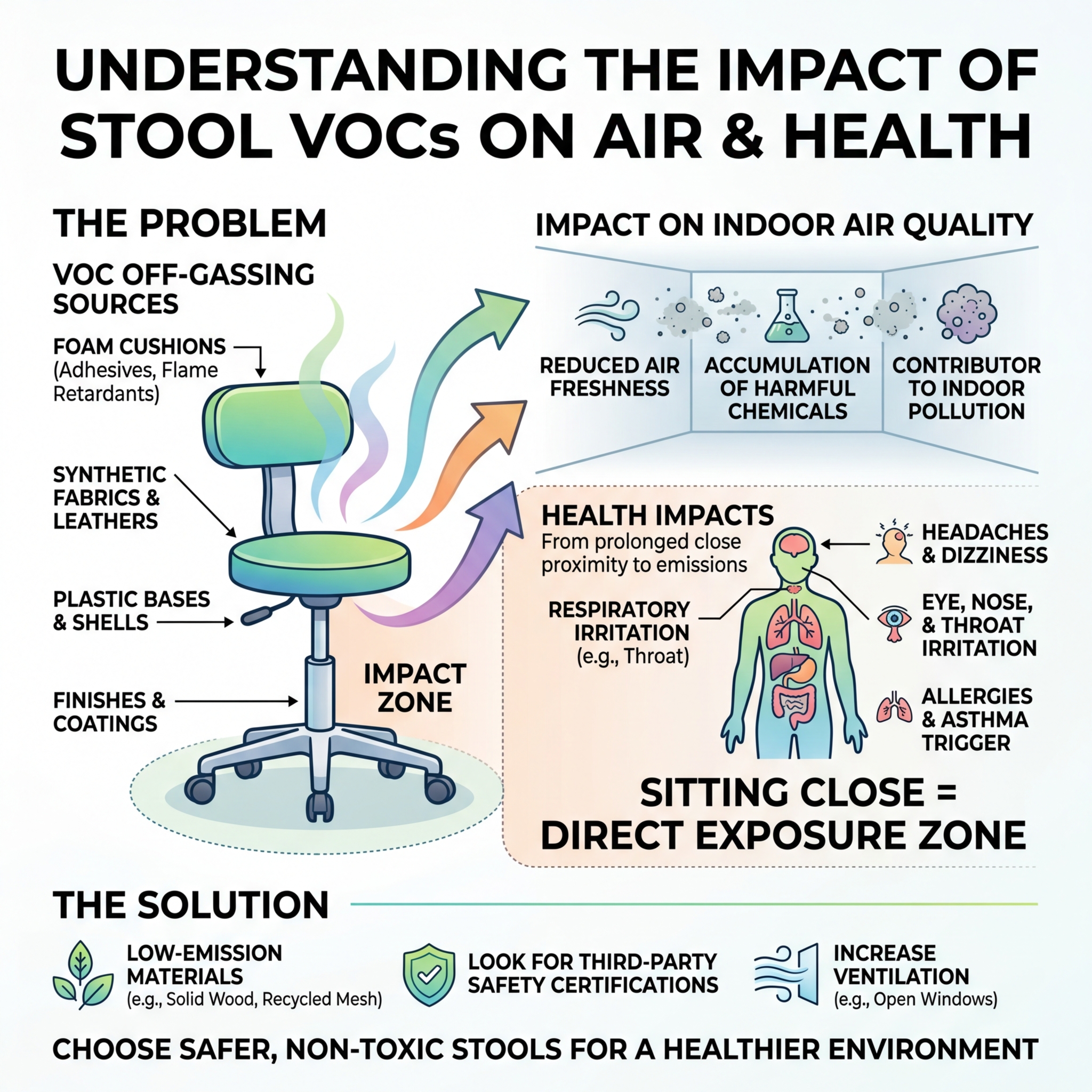
Many conventional stools off-gas volatile organic compounds (VOCs) — invisible chemicals released by foams, adhesives, finishes, and synthetic fabrics. According to the EPA, VOCs from furniture are a known contributor to indoor air quality problems. Sitting close to your stool for hours puts you right in the exposure zone.
The symptoms can be subtle at first: a persistent headache, itchy eyes, or that foggy, tired feeling at the end of the day that you can’t quite explain.
That “new furniture smell”? That’s VOCs.
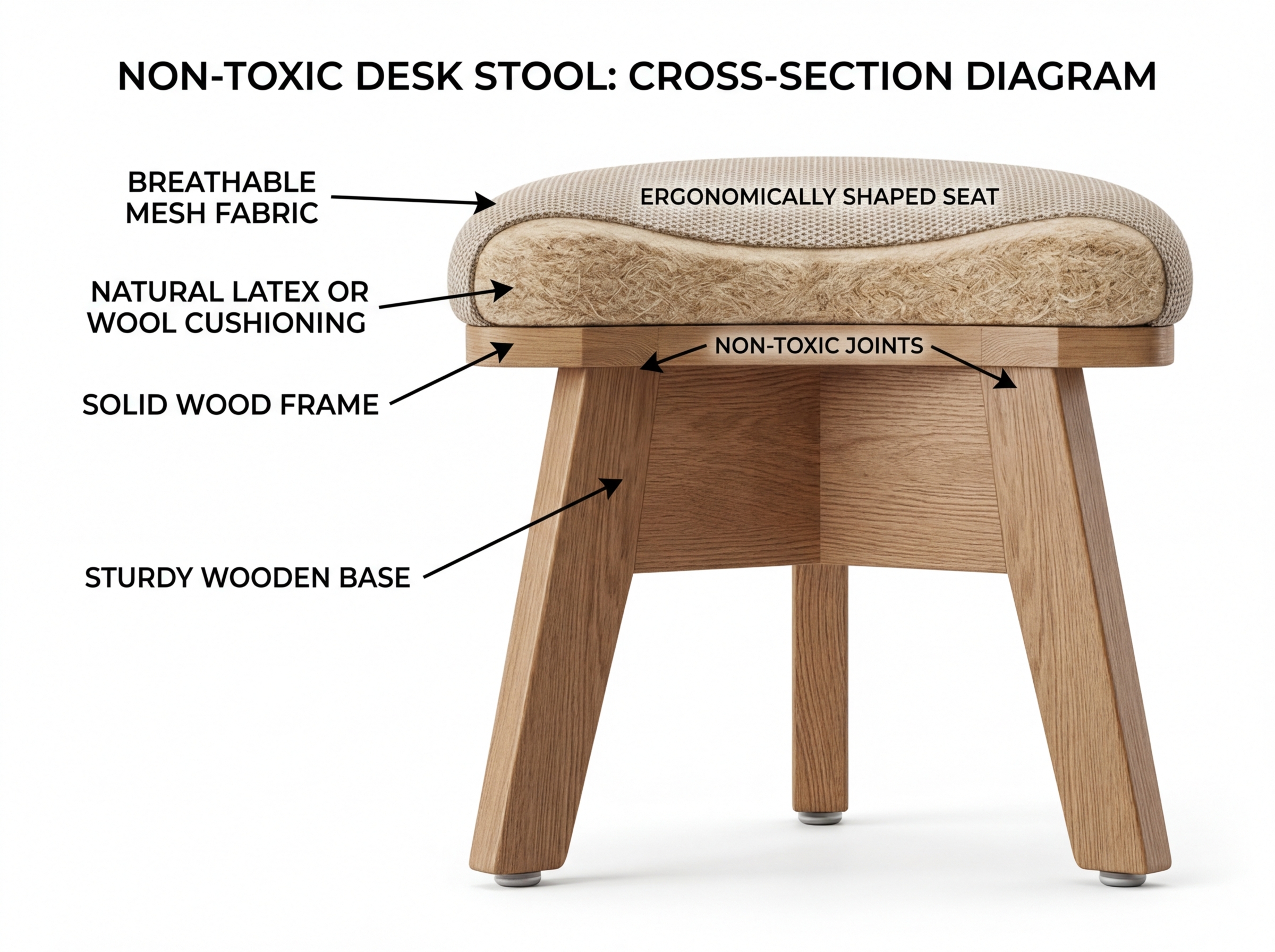
The good news is that safer options exist — stools built with solid wood, recycled mesh, and certified low-emission materials that don’t force you to trade comfort for safety.
This guide cuts through the marketing noise and shows you exactly which stools are worth your money — and which ones to avoid.
Understanding Toxicity in Office Seating
When we talk about the best non-toxic desk stools, we aren’t just talking about “eco-friendly” buzzwords. We are talking about the chemistry of the objects we touch and breathe near for eight hours a day. Conventional office furniture is often a cocktail of industrial chemicals that can linger in your home or office for years.
The Hidden Culprits: VOCs and Beyond
The primary concern in office seating is Volatile Organic Compounds (VOCs). These are chemicals that have a high vapor pressure at room temperature, meaning they “off-gas” or turn into gas easily. This process is most intense when a product is new—hence that “new chair smell”—but it can continue at lower levels for a long time.
Beyond VOCs, there are several specific materials we recommend avoiding:
- Flame Retardants: Historically added to polyurethane foam, these chemicals are linked to endocrine disruption and reproductive issues. Fortunately, many modern brands have phased them out, but it is always worth verifying.
- PVC (Polyvinyl Chloride): Often used in synthetic leather or plastic components, PVC contains phthalates that can leach out over time.
- Formaldehyde-based Foams: Used in cheap cushioning, formaldehyde is a known respiratory irritant and carcinogen.
- Particleboard and MDF: These engineered woods often use glues that release formaldehyde. Solid wood or high-quality plywood is a much safer bet.
Choosing a stool from our list of non-toxic-ergonomic-office-chairs ensures you are minimizing these risks. Respiratory health and focus are directly tied to the quality of the air you breathe while you work.
Key Certifications for the Best Non-Toxic Desk Stools
How do you know if a stool is actually safe? You look for third-party verification. Marketing teams love the word “natural,” but scientists love data.
- GREENGUARD Gold: This is the gold standard (literally). It tests for over 10,000 chemicals and VOCs, ensuring the product is safe for use in sensitive environments like schools and healthcare facilities.
- Clean Air GOLD: Issued by Intertek, this certification confirms the product meets strict low-VOC standards, often recognized by LEED and WELL building programs.
- BIFMA Level 3: This is a multi-attribute sustainability standard for furniture. Level 3 is the highest achievement.
- ANSI/BIFMA e3: This standard specifically addresses the environmental and social impacts of furniture manufacturing.
When you see these labels on non-toxic-ergonomic-desk-stools, you can rest easy knowing the claims have been backed by rigorous laboratory testing.
Top Picks for the Best Non-Toxic Desk Stools
Finding the best non-toxic desk stools requires balancing material purity with high-end engineering. You shouldn’t have to choose between a healthy spine and a healthy set of lungs.
The Gold Standard: Herman Miller
Herman Miller has spent decades perfecting the art of the “foam-free” chair. By using advanced suspension materials instead of thick foam pads, they eliminate the primary source of VOCs and flame retardants in office seating.
The Aeron Stool is a marvel of sustainable engineering. It is composed of more than 50% recycled material, including ocean-bound plastic. Instead of toxic foam, it uses 8Z Pellicle suspension—a breathable material that distributes weight across eight zones of varying tension. This not only keeps you cool but ensures there is no off-gassing from deteriorating cushions.
Similarly, the Mirra 2 Stool uses an “earth first” philosophy. Its base and spine are made from 100% recycled nylon. The AireWeave suspension seat and Butterfly Back provide immediate comfort without the need for adhesives or harmful finishes. For those seeking the best-eco-friendly-desk-chairs-for-posture, these stools offer a sophisticated, chemical-free solution.
Best for Active Sitting and Posture
Static sitting is the enemy of longevity. That’s why active stools are becoming the go-to for healthy offices. These stools engage your core and keep your blood flowing.
The ONGO FREE – ergonomic stool is a standout for those who want movement. Made in Germany, it features a curved base that encourages “micro-movements” throughout the day. The base is crafted from a wood-plastic composite (WPC) that includes recycled content, making it a sustainable choice that activates your muscles while you work.
Another excellent option is the Saddle Stool | Standing Desk Stool by myKolme. Designed in Finland, this stool uses PEFC-certified birch plywood and 100% post-consumer recycled polyester. The saddle shape drops your knees below your hips, naturally aligning your spine and engaging your core. It’s a perfect companion for a standing desk.
For younger users or those who really like to move, Kore Design wobble stools are a fantastic, simple option that prevents the physical stagnation often caused by traditional seating.
Best Sustainable Wood and Drafting Options
If you prefer a more traditional look, solid wood is the ultimate non-toxic material. Unlike engineered wood, solid hardwood doesn’t require formaldehyde-laden glues.
The Perch Wood Pneumatic Rolling Stool is a workhorse for studios and drafting tables. It features a seven-ply hardwood seat and a reinforced fiberglass nylon base. With a 300-lb weight capacity and a 15-year warranty, it’s built to last. The pneumatic adjustment allows for a 360-degree height range, making it incredibly versatile for different desk heights.
For a more “chair-like” stool experience, the Breck Stool offers essential ergonomics with a low carbon footprint. It features a GeoStretch back that provides targeted support through geometric flex zones. It is GREENGUARD Gold and BIFMA certified, proving that you can find affordable-recycled-wood-office-chairs and stools that meet the highest safety standards.
Best Budget-Friendly Non-Toxic Desk Stools
You don’t need a four-figure budget to secure a non-toxic seat. Some of the safest options are the simplest.
Blick Art Materials and National Public Seating offer stools that are staples in art studios and classrooms for a reason: they are nearly indestructible and made of inert materials. The Elephant Z-Stool, for example, uses 18-gauge steel tubing and a simple, non-porous seat. Because these stools rely on steel and hard plastics rather than complex foams and fabrics, they have very low off-gassing potential.
The Safco Vue is another budget-friendly contender that often carries GREENGUARD certification, offering a mesh back for breathability at a fraction of the cost of high-end designer stools. When shopping for options under $100, look for steel frames and minimal padding to ensure you’re getting one of the best non-toxic desk stools for your buck.
How to Verify and Maintain a Healthy Workspace
Even after you buy one of the best non-toxic desk stools, your job isn’t quite done. Maintaining a healthy workspace is an ongoing process of material transparency and good habits.
Verification Tools
If you want to go beyond the labels, we recommend checking the Red List Free database. Curated by the International Living Future Institute, this database identifies products that are free from the “worst in class” chemicals used in the building industry.
When looking at wood stools, prioritize those with water-based finishes or plant-based hard-wax oils. These cure quickly and are virtually odorless, unlike traditional oil-based varnishes that can smell for weeks.
Maintenance and Air Quality
To keep your non-toxic stool in top shape—and to keep your air clean—follow these tips:
- Ventilation is Key: Even the best stools can have a slight odor from packaging. Always assemble your new furniture in a well-ventilated room or near an open window.
- Use Carbon Filters: If you are highly sensitive, an air purifier with a dedicated carbon filter can help capture any stray VOCs.
- Gentle Cleaning: Avoid harsh chemical cleaners that add toxicity back into your environment. Use lukewarm water and a mild detergent (about 10% solution) for most surfaces. Vacuum mesh seats regularly to prevent dust buildup.
- Check the Casters: Some rubber casters (SBR rubber) have a strong “tire” smell. If your stool smells like a garage, consider swapping the wheels for polyurethane casters, which are much lower in odor.
For more information on keeping your accessories safe, see our guide on non-toxic-desk-mats-and-pads.
Frequently Asked Questions about Non-Toxic Stools
What is the “new chair smell” and is it dangerous?
That smell is the result of off-gassing VOCs. While a faint smell isn’t always “dangerous” in the immediate sense for everyone, it can cause headaches, dizziness, and eye irritation in the short term. For chemically sensitive individuals, it can be a major health trigger. Long-term exposure to certain VOCs is linked to more serious health issues, which is why we prioritize low-emission products.
Can a non-toxic stool be as comfortable as traditional foam chairs?
Absolutely. In fact, many people find them more comfortable over long periods. High-end mesh (like the Aeron’s Pellicle) or suspension materials (like the Mirra 2’s AireWeave) distribute weight more evenly than foam, which tends to bottom out or trap heat. Active stools also reduce the “stiffness” associated with sitting in one spot for too long.
Which stools are best for individuals with Multiple Chemical Sensitivity (MCS)?
For those with MCS, we recommend the “purest” options: solid wood stools with no finish or a plant-based oil finish, or all-metal/all-glass options. The Perch Wood Stool or the simple steel stools from National Public Seating are excellent choices because they minimize the number of synthetic materials involved.
Conclusion
At FinanceInvestX, we believe that your workspace is an investment in your most valuable asset: your health. Choosing one of the best non-toxic desk stools is more than just a decor choice; it’s a commitment to better indoor air quality and long-term physical wellness.
Whether you opt for the high-tech engineering of a Herman Miller Aeron or the simple, sturdy reliability of a solid wood Perch stool, you are making a move that will pay dividends in focus and productivity.
Ready to upgrade the rest of your office? Explore More info about ergonomic furniture to complete your healthy workspace transformation.