Your Chair Might Be Making You Sick — Here’s What to Do About It
The best non toxic ergonomic office chairs combine low-VOC certified materials with proper lumbar support, adjustability, and breathable construction — so you can sit for hours without harming your body or your air.
Quick answer — what to look for in a non toxic ergonomic office chair:
| Priority | What to Look For |
|---|---|
| Certifications | GREENGUARD Gold, CertiPUR-US, OEKO-TEX, BIFMA |
| Frame materials | Solid wood, powder-coated steel, recycled aluminum |
| Cushioning | Natural latex, bio-based foam, or no foam (mesh) |
| Upholstery | Organic cotton, OEKO-TEX certified fabric, or PU (not PVC) faux leather |
| Avoid | PVC, uncertified polyurethane foam, SBR rubber, unknown flame retardants |
Have you ever finished a workday feeling foggy, tired, or oddly irritable — even though you barely moved? You might blame the screen. Or the meetings. But the culprit could literally be underneath you.
Conventional office chairs are made with a mix of materials that quietly release chemicals into your air. Polyurethane foam, PVC upholstery, formaldehyde-based adhesives, and synthetic flame retardants all off-gas volatile organic compounds (VOCs) — especially when the chair is new.
You spend 6 to 8+ hours a day sitting in that chair. That’s a long time to breathe in a slow, invisible chemical cocktail.
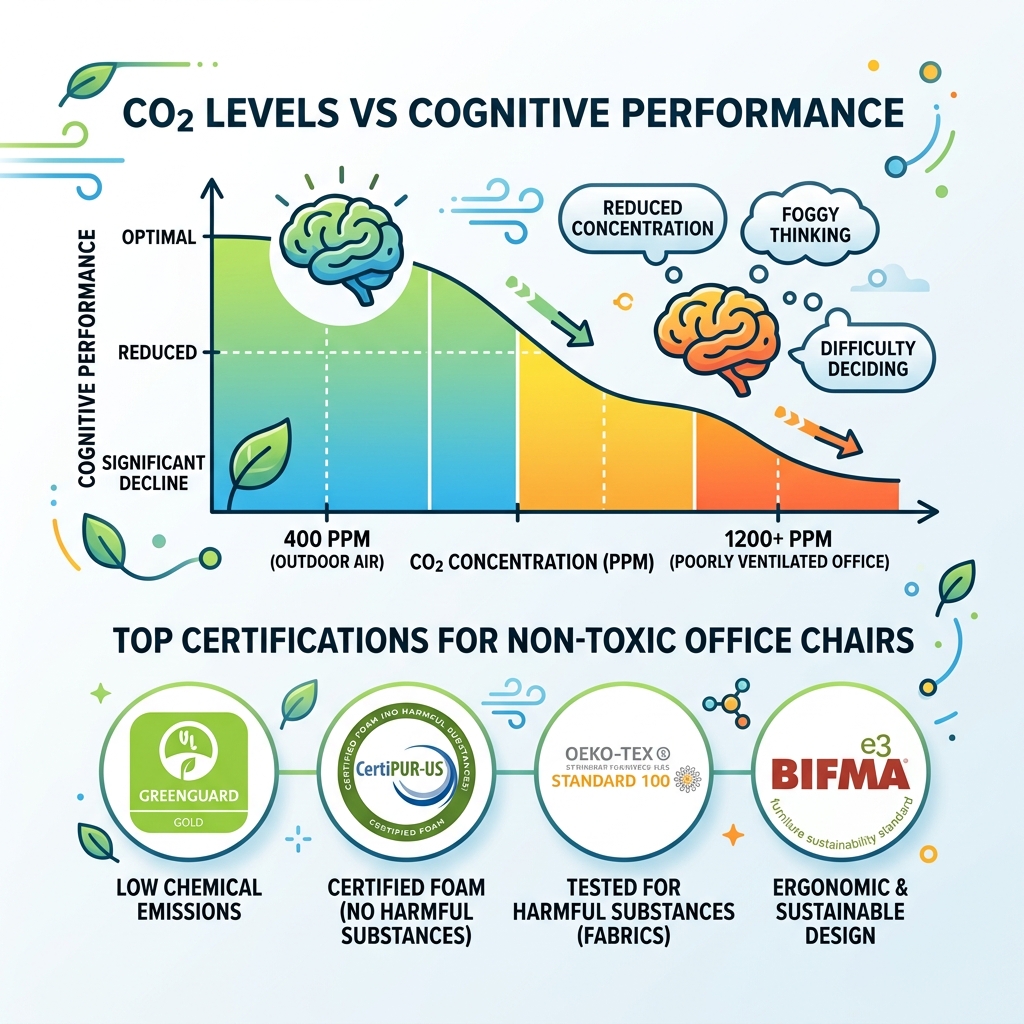
And it doesn’t stop there. In an enclosed home office, CO2 can climb from a normal outdoor level of 400 ppm to over 1,200 ppm within just one hour. At those levels, research shows measurable drops in concentration, decision-making, and focus. You’re not unmotivated — it might just be the air.
The good news? There are chairs built differently — with certified low-emission materials, smart ergonomic design, and real transparency about what’s inside them.
The Hidden Cost of Conventional Seating: Why You Need a Non Toxic Ergonomic Office Chair
When we think about office health, we usually think about back pain. But the “invisible” side of health—the air we breathe—is just as vital for our long-term productivity. Most mass-produced office chairs are essentially a chemical soup wrapped in fabric.
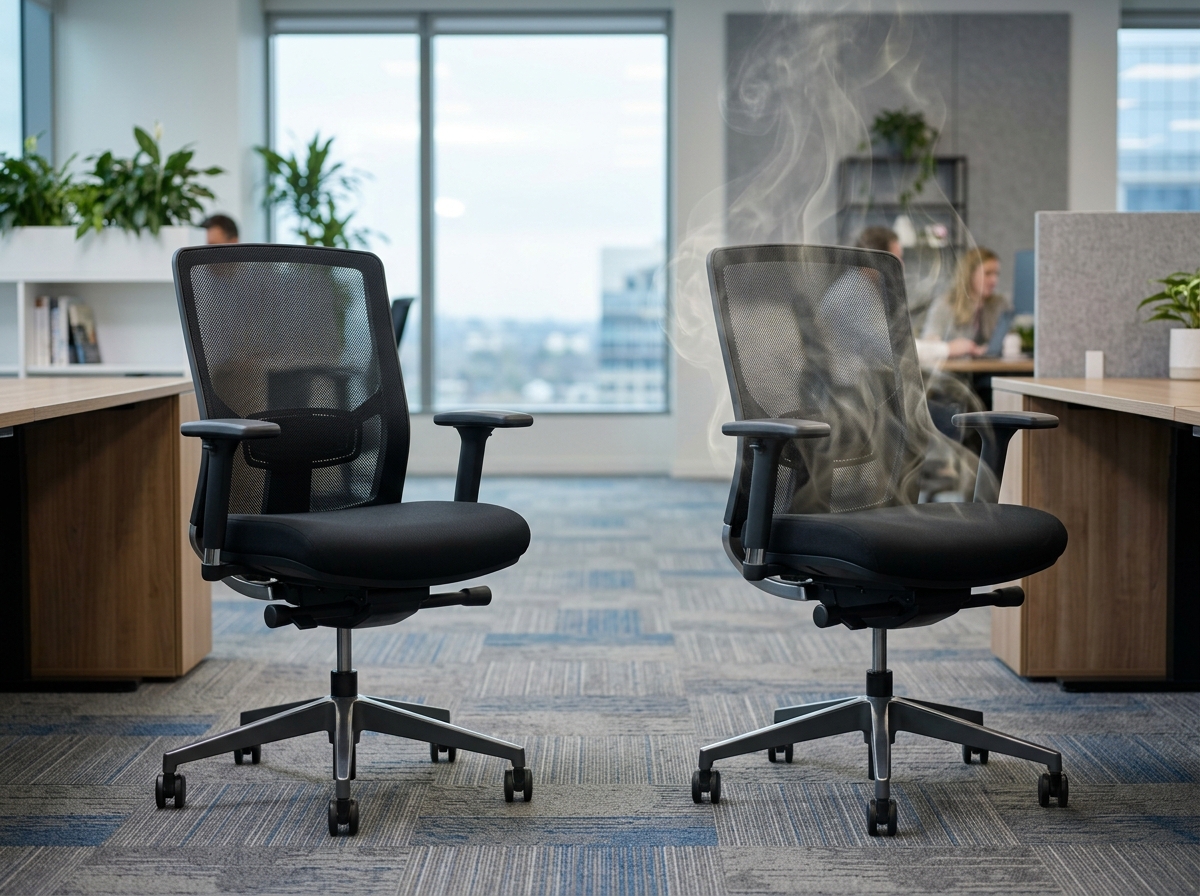
Conventional chairs often rely on polyurethane (PU) foam, a petroleum-based product that can contain volatile organic compounds (VOCs) like benzene and formaldehyde. These materials undergo a process called “off-gassing,” where they leak chemicals into your immediate breathing zone. If you’ve ever noticed a “new chair smell,” you’re actually smelling a cocktail of vapors that can cause headaches, dizziness, and respiratory irritation.
Beyond the foam, many chairs use flame retardants and phthalates (plasticizers used in PVC/vinyl) which are known endocrine disruptors. These chemicals don’t just stay in the chair; they can migrate into household dust and enter your system. When you combine these pollutants with poor ventilation, CO2 levels in a typical home office can skyrocket. Research shows that once CO2 hits 1,000 ppm, brain fog sets in, impairing your decision-making and focus.
Investing in a non-toxic ergonomic office chair isn’t just about being “eco-friendly”—it’s about protecting your cognitive engine. By choosing materials that don’t off-gas, you ensure that your 8-hour workday supports your ambition rather than stifling it with chemical-induced fatigue.
Decoding Certifications for a Healthy Workspace
The world of “green” marketing is full of vague terms like “natural” or “eco-friendly.” To find a truly healthy chair, we need to look at third-party certifications that involve rigorous laboratory testing.
| Certification | What It Actually Means | Why It Matters |
|---|---|---|
| GREENGUARD Gold | Tested for over 10,000 chemicals and VOCs. | The “Gold” standard is stricter, ensuring safety for sensitive individuals and children. |
| CertiPUR-US | Applies to foam; ensures it’s made without ozone depleters, PBDEs, or heavy metals. | Guarantees the foam won’t leak the most dangerous flame retardants into your home. |
| OEKO-TEX Standard 100 | Tests every component of a textile (thread, buttons, linings) for harmful substances. | Ensures the fabric touching your skin is free from toxic dyes and finishes. |
| BIFMA | Industry standard for safety, durability, and structural adequacy. | Ensures the chair won’t break or fail under pressure, which is an ergonomic safety must. |
| GOTS | Global Organic Textile Standard. | The highest level of organic certification for fabrics like cotton or wool. |
When we evaluate a non toxic ergonomic office chair, we look for a combination of these. For instance, a chair might have a GREENGUARD Gold shell but OEKO-TEX fabric. This transparency allows us to know exactly what we are bringing into our sanctuary.
Top-Tier Materials for Your Workspace
If you want to avoid the chemical cocktail, you have to look at the ingredients. The best chairs swap out petroleum-based plastics for materials that are inert or naturally derived.
Solid wood is a fantastic choice for frames and bases, provided it is finished with zero-VOC plant-based oils or water-based lacquers. Unlike MDF or plywood, solid wood doesn’t require formaldehyde-heavy glues. If you’re looking for a budget-friendly way to go green, checking out affordable recycled wood office chairs can give you that natural feel without the premium price tag.
For those who prefer a modern look, powder-coated steel and recycled aluminum are excellent. These materials are inert and don’t off-gas. Some innovative brands are even using ocean plastic—specifically upcycled fishing nets—to create high-performance chair frames. This doesn’t just keep your air clean; it helps clean the planet, too. You can find more about the best eco-friendly desk chairs for posture that utilize these sustainable metals and plastics.
Essential Materials for a Non Toxic Ergonomic Office Chair
When it comes to the parts of the chair you actually touch, two materials stand out:
- Natural Latex: Derived from rubber trees, this is the gold standard for non-toxic cushioning. It’s breathable, antimicrobial, and lasts far longer than synthetic foam without sagging or off-gassing.
- Organic Cotton and Wool: These natural fibers are naturally flame-resistant (especially wool), meaning manufacturers don’t need to add toxic chemical flame retardants to meet safety codes.
Engineering Movement with Sustainable Design
Ergonomics and sustainability are now merging through “climate-positive” manufacturing. Brands like Humanscale and Haworth are creating chairs that use gravity mechanisms. Instead of complex, grease-heavy manual knobs, these chairs use your own body weight to provide the perfect recline tension.
Many of these chairs also incorporate recycled nylon and bio-based foams (made from soy or castor beans). If you prefer an active sitting style, exploring non-toxic ergonomic desk stools can be a great way to engage your core while keeping your air quality pristine.
Beyond the Seat: Creating a Holistic Healthy Environment
A great chair is the foundation, but it’s only one piece of the puzzle. To truly “de-tox” your office, you need to look at the environment as a whole.
- CO2 Monitoring and Ventilation: Even with a non-toxic chair, your own breath can build up CO2. We recommend opening a window for 10 minutes every two hours. Using a monitor like the Awair can help you see when levels cross that 1,000 ppm “brain fog” threshold.
- HEPA and Carbon Filtration: While ventilation handles CO2, a HEPA filter with an activated carbon stage is essential for catching particulates and any lingering VOCs from other furniture.
- Circadian Lighting: Use blue-rich light (5000K+) in the morning to boost alertness, and switch to warm, amber tones (2700K) in the evening to protect your melatonin production.
- Indoor Plants: While the myth that three plants will “purify” your air is false (you’d need hundreds!), they are incredible for mental health. Research shows plants promote a relaxed, attentive state of mind, helping you tackle cognitively demanding tasks.
For those who use standing desks, adding anti-fatigue desk stools can help you transition between sitting and standing without straining your lower back or legs.
Frequently Asked Questions about Non-Toxic Seating
What is the “new chair smell” and is it dangerous?
That smell is the result of VOCs off-gassing from adhesives, finishes, and foam. While the odor eventually fades, it indicates that chemicals are being released into your breathing space. For sensitive individuals, this can cause immediate headaches or respiratory issues. Choosing a GREENGUARD Gold certified chair ensures these emissions are kept to a minimum from day one.
How can I mitigate off-gassing from my current office chair?
If you can’t replace your chair immediately, increase ventilation. Keep a window cracked or use a high-quality air purifier with an activated carbon filter specifically designed to trap VOCs. You can also “sun bake” the chair by leaving it in a sunny, well-ventilated room (or porch) for a few days to accelerate the off-gassing process.
Can indoor plants replace the need for a non toxic ergonomic office chair with low VOCs?
Unfortunately, no. While plants are great for your mood, NASA-style air purification requires a density of plants that isn’t practical for an office. It is much more effective to stop the toxins at the source by choosing a non toxic ergonomic office chair and relying on proper ventilation for air exchange.
Conclusion
At FinanceInvestX, we believe that your workspace should be an investment in your future, not a tax on your health. By choosing a non toxic ergonomic office chair, you are removing a significant source of indoor pollution and giving your brain the clean air it needs to perform at its peak.
Whether you choose a high-end mesh task chair or decide to stop the slump with ergonomic desk stools, the goal is the same: a setup that supports your posture and your lungs. Ready to transform your workspace? Explore our full range of healthy office furniture and start building an office that works as hard as you do.