The Hidden Impact of Your Office Stool
A non-toxic ergonomic office stool can make a real difference to your health, focus, and comfort — especially if you spend 6-8 hours a day at a desk. Here are the top options to consider:
| Stool | Key Material | Certification | Best For |
|---|---|---|---|
| Herman Miller Aeron Stool | 50%+ recycled, ocean-bound plastic | GREENGUARD | All-day ergonomic use |
| Humanscale Sedeo Stool | 94% recycled frame, solid wood | Sustainable sourcing | Posture & spine support |
| Breck Stool | 50%+ recycled content | GREENGUARD Gold, BIFMA | Standing desk pairing |
| Zeph Stool | 50% recycled 3D Knit | Recycled content verified | Modern collaborative spaces |
| ONGO FREE | Wood-plastic composite (WPC) | Made in Germany | Active sitting & movement |
| Mirra 2 Stool | 100% recycled nylon base | Earth-first design | Dynamic, flexible workspaces |
Most people focus on how a stool feels. Few think about what it’s releasing into the air.
Conventional office stools are often built with polyurethane foam, PVC coatings, and chemical adhesives. These materials off-gas Volatile Organic Compounds (VOCs) — invisible chemicals that drift into the air you breathe all day. That “new furniture smell”? It’s not just a smell. It’s a sign that chemicals are being released into your workspace.
One study found that CO2 levels in a closed home office can rise from 400 ppm to over 1,200 ppm within a single hour — and that’s just from breathing. Add VOC off-gassing from cheap seating, and your indoor air quality can quietly undermine your concentration, energy, and even your long-term health.
The good news: you have better options. A growing range of ergonomic stools use recycled metals, solid wood, and certified low-emission materials — without sacrificing comfort or support.
This guide covers everything you need to choose the right non-toxic ergonomic stool for your workspace.
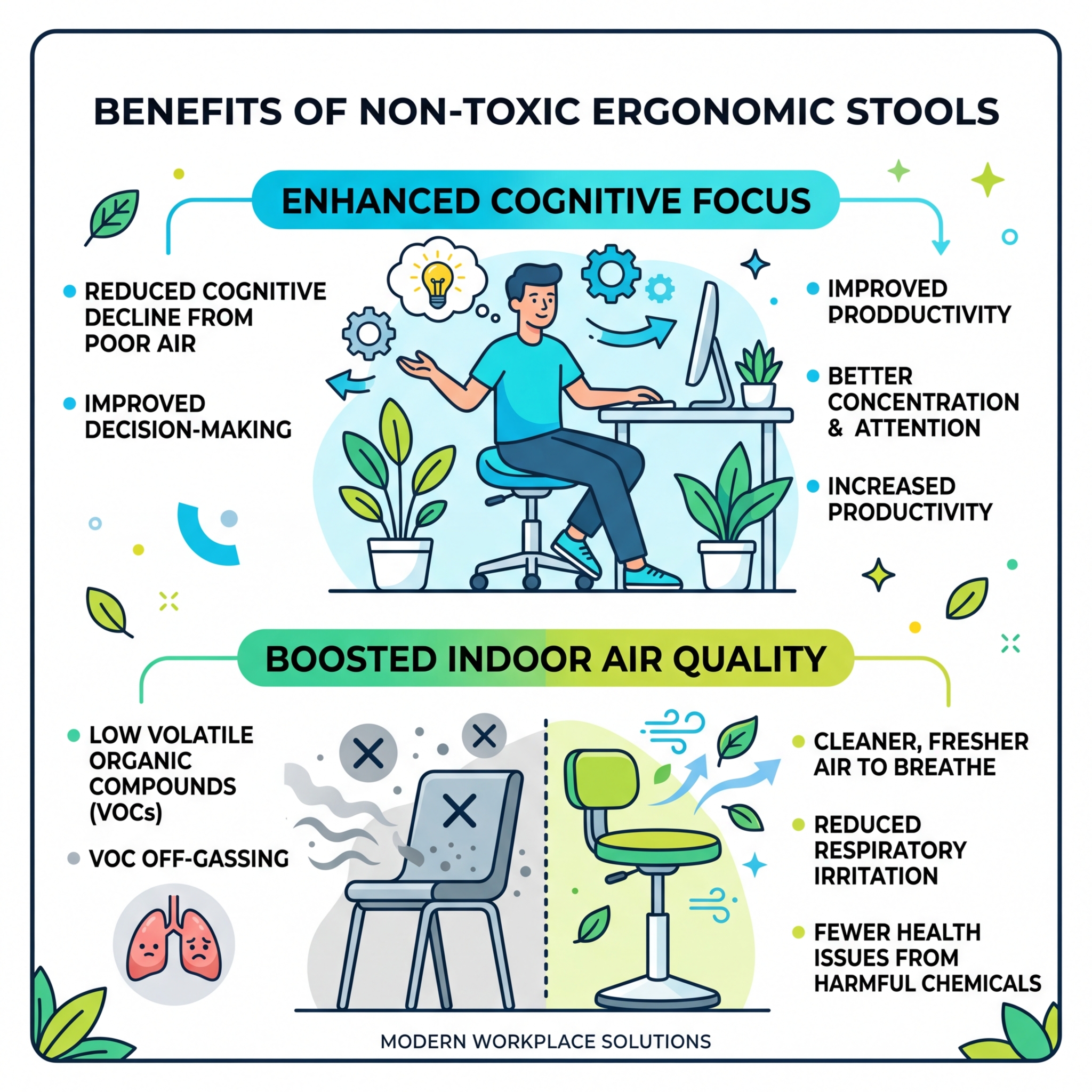
Health Risks and Material Safety in Office Seating
We often talk about ergonomics in terms of back pain, but the chemical makeup of our furniture is just as critical for long-term wellness. Conventional office stools are frequently a cocktail of synthetic materials that may look sleek but hide significant health risks.
The most common offender is polyurethane (PU) foam. While it provides that initial “squish” we associate with comfort, PU foam often contains carcinogens like benzene, toluene, and formaldehyde. Furthermore, the isocyanates used in its production are powerful respiratory irritants and sensitizers. To make matters worse, many manufacturers add flame retardants to this foam. These chemicals don’t stay put; they migrate into the dust in our offices, where we accidentally inhale or ingest them.
Then there is PVC (Polyvinyl Chloride), often found in faux leather or plastic components. PVC is notorious for containing phthalates, which are known endocrine disruptors. If you’ve ever experienced itchy eyes, a nagging headache, or unexplained fatigue by 3:00 PM, you might not just be “tired.” You could be reacting to the off-gassing of your seat.
In a confined home office, these chemicals accumulate. When CO2 levels climb above 1,000 ppm—which happens quickly in a small room—it causes noticeable brain fog, reduced concentration, and impaired decision-making. Adding a high-VOC stool to that environment is like trying to run a marathon in a smog-filled tunnel. We’ve discussed similar issues in our guide to non-toxic-ergonomic-office-chairs, where we highlight how material safety is an investment in your cognitive performance.

Essential Materials and Certifications for a Non-Toxic Ergonomic Office Stool
When we set out to find a truly non-toxic ergonomic office stool, we look for materials that come from the earth or are safely recycled.
- Solid Wood: Unlike particleboard or MDF, which use glues loaded with formaldehyde, solid wood is inert and durable.
- Natural Latex: A fantastic alternative to PU foam, natural latex is derived from rubber trees and is naturally antimicrobial and breathable.
- Organic Fabrics: Look for wool, organic cotton, or hemp. These don’t require the heavy chemical treatments found in synthetic polyesters.
- Recycled Metals & Plastics: Aluminum and steel are infinitely recyclable and don’t off-gas. Innovative brands are even using “ocean-bound” plastics—recycled fishing nets—to create high-performance seating.
Why a Non-Toxic Ergonomic Office Stool Beats Conventional Foam
The primary advantage of choosing a non-toxic ergonomic office stool is the peace of mind that comes with third-party verification. We don’t have to take a manufacturer’s word for it; we can look for “the big three” certifications:
- GREENGUARD Gold: This is the gold standard. Products with this label have been rigorously tested for over 10,000 chemicals and VOCs. It ensures the stool is safe for sensitive environments like schools and healthcare facilities.
- CertiPUR-US: If the stool must use foam, ensure it is CertiPUR-US certified. This guarantees the foam is made without ozone depleters, PBDE flame retardants, mercury, lead, or formaldehyde.
- Cradle to Cradle: This looks at the entire lifecycle of the product, ensuring it is made with safe materials and can be recycled or composted at the end of its life.
By prioritizing low-VOC finishes and water-based adhesives, you are creating a workspace that supports your lungs as much as your lumbar. For a deeper dive into these options, check out our list of non-toxic-ergonomic-desk-stools.
Top-Rated Sustainable Stool Models for Modern Workspaces
We’ve rounded up the best stools that balance chemical safety with high-end ergonomics. These aren’t just seats; they are pieces of engineering designed to keep you moving and breathing easily.
Aeron Stool
The Aeron is an icon for a reason. It pioneered the “no foam, no fabric” approach nearly 30 years ago. Instead, it uses a breathable 8Z Pellicle suspension that distributes weight evenly and eliminates the need for toxic foams. The modern version is even more sustainable, incorporating ocean-bound plastic into the frame. It features the PostureFit SL for total spinal support and a footrest that is three times wider than standard rings, ensuring your legs don’t go numb during a long trading session.
Sedeo Stool | Ergonomic Stool | Humanscale
Designed by the legendary Don Chadwick, the Sedeo is a masterclass in “less is more.” It’s built to last over a decade, using a die-cast aluminum frame and solid wood legs sourced from sustainable farms. With 94% recycled content in the frame, it’s one of the most eco-friendly options on the market. The seat contours provide essential sacral support, encouraging a healthy back posture without the need for bulky cushions.
ONGO FREE – ergonomic stool
If you hate sitting still, the ONGO FREE is for you. This German-engineered stool features a curved base that promotes “active sitting.” Every time you reach for a coffee or lean toward your monitor, the stool moves with you, activating your core muscles and relieving spinal pressure. It’s made from a wood-plastic composite (WPC) that includes recycled content, proving that sustainability can be standard, not an extra.
Breck Stool
The Breck Stool is a powerhouse for standing desk users. It offers a weight-activated recline that automatically adjusts to your body weight. With GREENGUARD Gold and BIFMA certifications, it meets the highest standards for low emissions and durability. It’s composed of over 50% recycled content and is 94% recyclable. Plus, its GeoStretch back provides a flexible yet firm support system that keeps you cool and aligned.
Zeph Stool – Stool – Herman Miller
The Zeph Stool bridges the gap between mid-century aesthetics and modern kinematic ergonomics. Its “monoshell” design uses your body’s natural pivot points to create a balanced recline. We love the optional 3D Knit cover—it’s made from 50% post-consumer recycled content and produces zero fabric waste during manufacturing. It’s a stylish, colorful, and chemical-conscious choice for collaborative home offices.
Mirra 2 Stool
The Mirra 2 is “Earth-first” by design. It’s 30% lighter than the original version, reducing its carbon footprint significantly. The loop spine allows for lateral movement, meaning the stool mirrors your body as you twist and turn. Its AireWeave seat is breathable and free from foam, making it a top contender for those with chemical sensitivities.
Ergonomics, Active Sitting, and Productivity
Why choose a stool over a traditional chair? The answer lies in active sitting.
Traditional chairs often encourage “passive sitting,” where we slump into the backrest and let our core muscles go on vacation. This leads to the dreaded “C-shape” spine. A non-toxic ergonomic office stool, however, often lacks a full backrest or features a “sway” mechanism. This forces your body to engage its core to stay balanced.
This micro-movement increases blood flow and oxygenation, which directly impacts your productivity. When your body is engaged, your brain stays alert. We’ve seen in our research on the best-eco-friendly-desk-chairs-for-posture that movement is the key to avoiding the afternoon slump.
Achieving Neutral Posture with a Non-Toxic Ergonomic Office Stool
To get the most out of your stool, you need to set it up correctly. Here is our checklist for a “neutral posture”:
- The 90-Degree Rule: Adjust the height so your knees are at a 90-degree angle with your feet flat on the floor (or the stool’s footrest).
- Sacral Support: Even without a full back, the seat should contour to support the base of your spine (the sacrum). This prevents your pelvis from tilting backward.
- Standing Desk Integration: Stools are the perfect partner for height-adjustable desks. They allow for “perching”—a halfway point between sitting and standing that keeps your hip flexors open.
- Wrist Alignment: Your wrists should be even with your keyboard, not angled up or down.
For those on a budget, you might consider affordable-recycled-wood-office-chairs, which offer similar non-toxic benefits in a more traditional form factor.
Frequently Asked Questions about Sustainable Stools
Can office stools replace full chairs for all-day use?
Yes, but with a caveat. Stools are excellent for promoting core engagement and are ideal for those who toggle between sitting and standing. However, if you have pre-existing back conditions that require significant lumbar support, you might want to use a stool for 2-4 hours a day and switch to a full ergonomic chair for the remainder. Many of us at FinanceInvestX find that “perching” on a stool like the Aeron or Sedeo for the most intense focus blocks of the day works best.
How do I mitigate toxicity in a budget stool?
If you aren’t ready to drop several hundred dollars on a new stool, you can still improve your environment:
- Add a Non-Toxic Cushion: Replace synthetic foam pads with cushions made from buckwheat (like WELLB) or natural latex.
- Ventilate: Open your windows for 10 minutes every two hours. This is the most effective way to lower VOC and CO2 concentrations.
- Air Purifiers: Use a HEPA filter combined with an activated carbon filter. The carbon is what actually “soaks up” the chemical VOCs from the air.
What certifications should I look for in a non-toxic stool?
Beyond GREENGUARD Gold and CertiPUR-US, look for GOTS (Global Organic Textile Standard) for fabrics and OEKO-TEX to ensure no harmful substances are present in the textiles. BIFMA standards are also helpful to ensure the stool is built to withstand heavy professional use, ensuring it won’t end up in a landfill in two years.
Conclusion
At FinanceInvestX, we believe that your workspace is an investment in your most valuable asset: your health. Choosing a non-toxic ergonomic office stool isn’t just about being “eco-friendly”—it’s about optimizing your indoor air quality and physical alignment so you can perform at your peak.
Whether you opt for the iconic design of the Aeron Stool or the active movement of the ONGO FREE, you are taking a proactive step toward a healthier, more focused work life. By removing the burden of VOCs and poor posture, you’re clearing the way for better decision-making and long-term wellness.
Ready to upgrade the rest of your office? Explore more eco-friendly office furniture to complete your healthy workspace transformation.