Why Your Next Green Office Chair Could Change How You Work and Feel
A green office chair is more than just a color choice — it’s a statement about how you work, how you feel, and what materials you bring into your home or office environment.
Quick answer: What makes a green office chair worth buying?
- Color + sustainability: “Green” can mean the color and eco-friendly materials like recycled polyester or bio-based foam
- Ergonomic support: Look for lumbar support, adjustable seat depth, and tilt mechanisms to reduce back pain
- Non-toxic materials: Certifications like GREENGUARD Gold signal low chemical emissions and safer indoor air
- Price range: Budget options start under $75; premium ergonomic chairs (like Herman Miller or Haworth) can reach $800+
- Retailers: Wayfair lists 739+ options, Target carries 132+, and Herman Miller offers 13 curated green home office chairs
Most of us spend the majority of our workday sitting down. That puts real strain on the spine, hips, and lower back — especially without proper support. And if your chair is made with low-quality synthetic materials, it may also be releasing chemicals into the air you breathe every day.
That’s a problem worth solving.
The good news? A well-chosen green office chair tackles both issues at once. The right chair supports your posture and keeps your workspace healthier by using cleaner, more sustainable materials.
This roundup is built for anyone who wants to stop compromising — on comfort, on health, or on the planet.

The Health and Ergonomic Benefits of a Green Office Chair
When we talk about a green office chair, we are often looking at the intersection of biophilic design (bringing nature indoors) and high-level engineering. The primary goal of any high-quality seat is to mitigate the physical toll of a sedentary workday. Research shows that most of us spend long hours sitting, which directly impacts our posture and spine health.
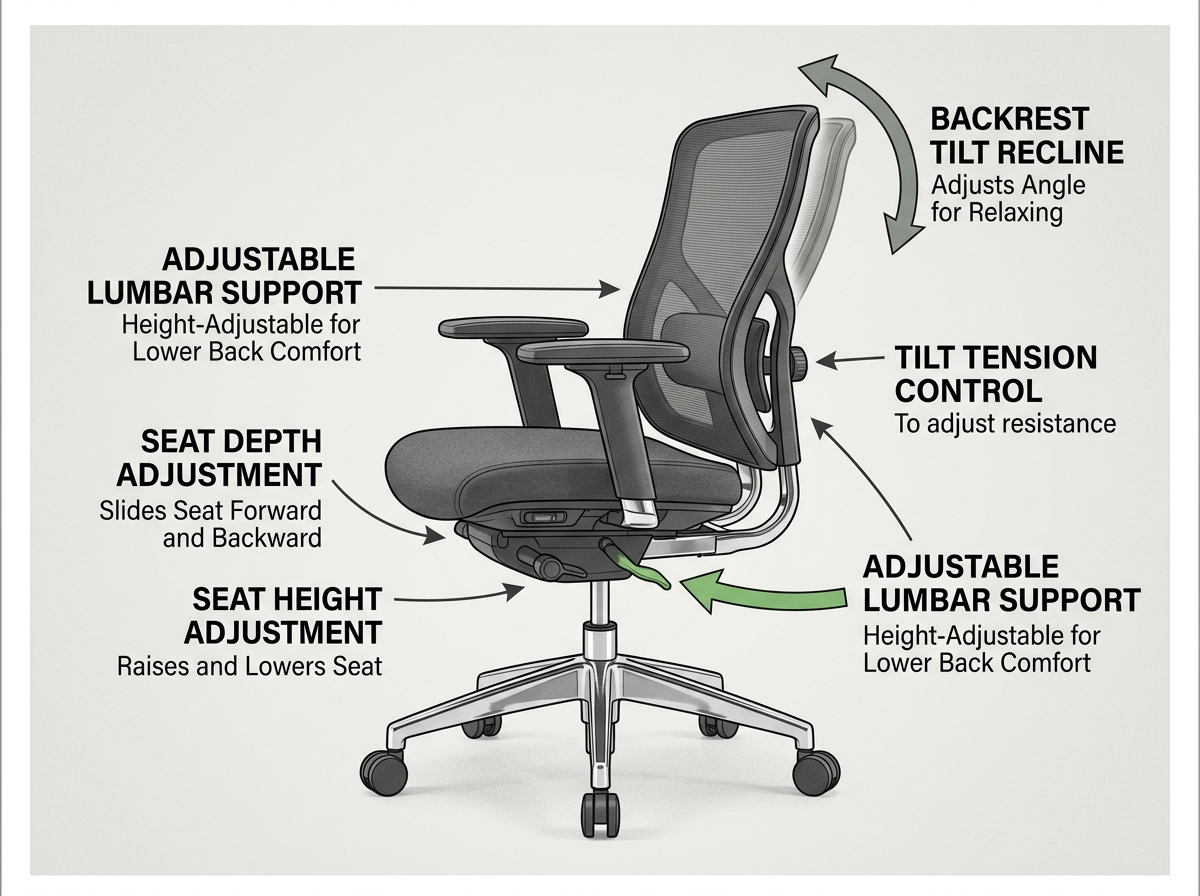
Investing in a chair with robust lumbar support is non-negotiable. Proper support maintains the natural “S” curve of your spine, preventing the dreaded “office slouch.” Beyond the back, a quality chair should offer a synchro-tilt mechanism. This feature allows the backrest and seat to tilt in a coordinated way, opening up the torso and improving blood flow throughout the body.
Another critical factor is hip pressure reduction. Ergonomic chairs provide adequate seat depth and contoured cushions to distribute weight evenly. This is vital for long-term comfort, as it prevents the “pins and needles” feeling in your legs after a three-hour Zoom marathon. For those interested in a deeper dive into how these features protect your body, we recommend exploring our guide on non-toxic ergonomic office chairs.
A standout example of this engineering is the Fern Office Chair — Innovative Ergonomic Design by Haworth. This chair uses a patented “stem and frond” system that mimics the structure of a fern, flexing with your every movement to provide “edgeless comfort.” It’s a prime example of how nature-inspired design can solve very human problems like back pain and fatigue.
Choosing a non-toxic green office chair
We often forget that the furniture we sit on is “off-gassing” chemicals into our immediate breathing zone. Many traditional chairs are treated with harsh flame retardants or contain high levels of formaldehyde in their wood or foam components. These Volatile Organic Compounds (VOCs) can degrade indoor air quality and lead to headaches or respiratory irritation over time.
To combat this, we should look for chairs that are certified for low chemical emissions. The ReGeneration by Knoll® is a fantastic option here; it uses bio-based foam derived from soy and minimizes the number of components used in its construction. Choosing a non-toxic model isn’t just about being “eco-friendly”—it’s about protecting your respiratory health. For more on localized health-focused seating, check out our research on non-toxic ergonomic desk stools.
Impact of active sitting on concentration
Static sitting is the enemy of focus. When we remain perfectly still, our circulation slows, and our brain receives less oxygenated blood. This is where “active sitting” technology comes into play.
Modern chairs like the Aeris 3Dee office chair made of recycled polyester in fern green incorporate 3D movement technology. This allows for micro-movements—small shifts in your hips and core—that mimic the natural motion of walking. These movements keep your muscles engaged and your blood flowing, which has been shown to reduce fatigue and boost concentration. It turns out that a little bit of wiggle room is exactly what your brain needs to stay sharp during a long afternoon of financial analysis.
Sustainable Materials and Eco-Friendly Certifications
Sustainability in the green office chair is often verified through rigorous third-party certifications. If you see a “GREENGUARD Gold” tag, it means the product has been tested for over 10,000 chemicals and VOCs. This is the gold standard for maintaining a healthy home office environment.
We are also seeing a massive shift toward recycled polyester. This fabric is often made from post-consumer plastic bottles, diverted from landfills and spun into high-performance upholstery. Not only is this better for the planet, but recycled polyester is incredibly durable, often boasting abrasion resistance scores of over 100,000 Martindale cycles (that’s a lot of sitting!). You can learn more about how these materials stack up in our article on the best eco-friendly desk chairs for posture.
Other certifications to watch for include:
- BIFMA Standards: Ensures the chair is durable and safe for long-term commercial use.
- Cradle to Cradle: Evaluates the entire lifecycle of the product, from raw material sourcing to its eventual recyclability.
- Digital Knit: Some brands, like Haworth, use a zero-waste digital knit process that creates the fabric to the exact size of the chair, leaving no scraps behind.
Finding a budget-friendly green office chair
You don’t need a Wall Street bonus to afford a sustainable seat. While premium brands like Herman Miller or Haworth sit in the $800 to $1,500 range, there are excellent entry-level options.
The GRÖNFJÄLL Office chair with arm/headrest, Letafors green/white is a middle-ground hero. At approximately $479, it offers a synchronized tilt mechanism and a removable, washable cover—extending the life of the chair significantly. For those on a tighter budget, the Home Office Chairs – IKEA collection offers basic ergonomic features and vibrant green hues starting at much lower price points.
If you are looking for something truly unique and affordable, consider affordable recycled wood office chairs, which offer a rustic, eco-conscious aesthetic without the premium price tag of high-end task chairs.
Material durability and maintenance
When selecting your green office chair, the material choice dictates how long it will last and how much effort you’ll spend cleaning it.
- Mesh: Excellent for breathability. If you tend to run hot or work in a warm climate, mesh keeps air flowing to your back.
- Velvet: Offers a “glam” aesthetic and is surprisingly durable, though it requires more frequent vacuuming to keep it looking fresh.
- Faux Leather/Vegan Leather: Easy to wipe down and provides a professional, executive look.
- Fabric/Polyester: The most common choice. Brands like OfficeAnything.com offer a wide variety of fabric patterns, including green florals and solids, that are treated to be stain-resistant.
Pro tip: Always check if the chair has a removable cover. Being able to toss your chair’s upholstery into the washing machine is a game-changer for longevity.
Key Features to Look for in Sustainable Seating
Not all chairs are created equal. When browsing through the 739+ options on Wayfair or the curated selections at Target, use this checklist to ensure you’re getting a high-performance tool, not just a piece of furniture.
| Feature | Why It Matters | Best For |
|---|---|---|
| Adjustable Seat Depth | Ensures a “three-finger gap” between the seat edge and your knees. | Long-term leg circulation |
| 4D Armrests | Adjusts height, width, depth, and pivot angle. | Reducing shoulder strain |
| Weight Capacity | Most standard chairs support 250–300 lbs; heavy-duty models go up to 400+ lbs. | Durability and safety |
| Tilt Tension | Controls the amount of force needed to recline. | Personalized comfort |
| Caster Type | Hard wheels for carpet; soft, rubberized wheels for hardwood/tile. | Floor protection |
Retailers like Target make it easy to filter by these features, while the Herman Miller Store provides “fully assembled” shipping for many of their green models, saving you the headache of a DIY project.
Frequently Asked Questions about Eco-Friendly Seating
Are green office chairs easy to assemble?
Most modern office chairs are designed with user-friendly assembly in mind. Retailers like Target and IKEA include all necessary tools and clear, illustrated instructions. However, if you want to skip the hex key altogether, brands like Herman Miller often ship their chairs fully assembled. On average, a standard task chair takes about 15 to 30 minutes for one person to put together.
What is the average weight capacity for ergonomic chairs?
The standard weight capacity for a green office chair is typically 250 to 275 lbs. However, high-performance chairs like the Haworth Fern are warrantied for up to 325 or 350 lbs depending on the configuration. Always check the specifications if you require a “Big and Tall” model, as these are specifically engineered with reinforced gas lifts and wider bases.
How do I know if a chair is truly non-toxic?
Don’t just take the manufacturer’s word for it—look for certifications. GREENGUARD Gold and BIFMA Level are the most reliable indicators. Additionally, check the material list for “recycled polyester” and “bio-based foam.” If a chair is advertised as “formaldehyde-free” or “free from flame retardants,” that is a very positive sign for your indoor air quality.
Conclusion
At FinanceInvestX, we believe that your workspace is one of the most important investments you can make. A green office chair isn’t just a stylish addition to your room; it’s a commitment to your long-term health and productivity. By choosing a chair that supports your spine and uses non-toxic, sustainable materials, you are setting yourself up for years of focused, pain-free work.
Whether you opt for a budget-friendly IKEA model or a high-end ergonomic masterpiece from Knoll or Haworth, the key is to prioritize adjustability and material transparency. Your back—and the planet—will thank you.
For more insights into creating a high-performance, healthy workspace, explore our extensive coverage of office furniture and ergonomics.