Your Back Is Trying to Tell You Something — Are You Listening?
Ergonomic desk stools are a smarter alternative to traditional office chairs for people who want to stay active, reduce back pain, and improve posture throughout the workday.
Here are the top ergonomic desk stools worth considering:
- Herman Miller Aeron Stool — Premium pick with 8Z Pellicle suspension, PostureFit SL back support, up to 91% recyclable, $2,100
- Herman Miller Cosm Low Back Stool — Auto-adjusting comfort with no manual setup needed, $1,380
- Humanscale Saddle/Pony Stool — Saddle-style design that promotes a healthy spinal S-curve, starts at $558
- Haworth Breck Stool — Science-backed GeoStretch back, 94% recyclable, $600
- ErgoCentric 3-in-1 Sit Stand Stool — Versatile and budget-friendly at $519 (30% off)
- Autonomous ErgoStool — Best entry-level active sitting stool, $149
- Humanscale Freedom Saddle/Pony Stool — Available from $403 via UPLIFT Desk
If you spend most of your day sitting, your body is likely paying the price. Prolonged sitting in a traditional chair puts sustained pressure on the spine, tightens hip flexors, and cuts off circulation — leading to the familiar afternoon slump of fatigue and back pain.
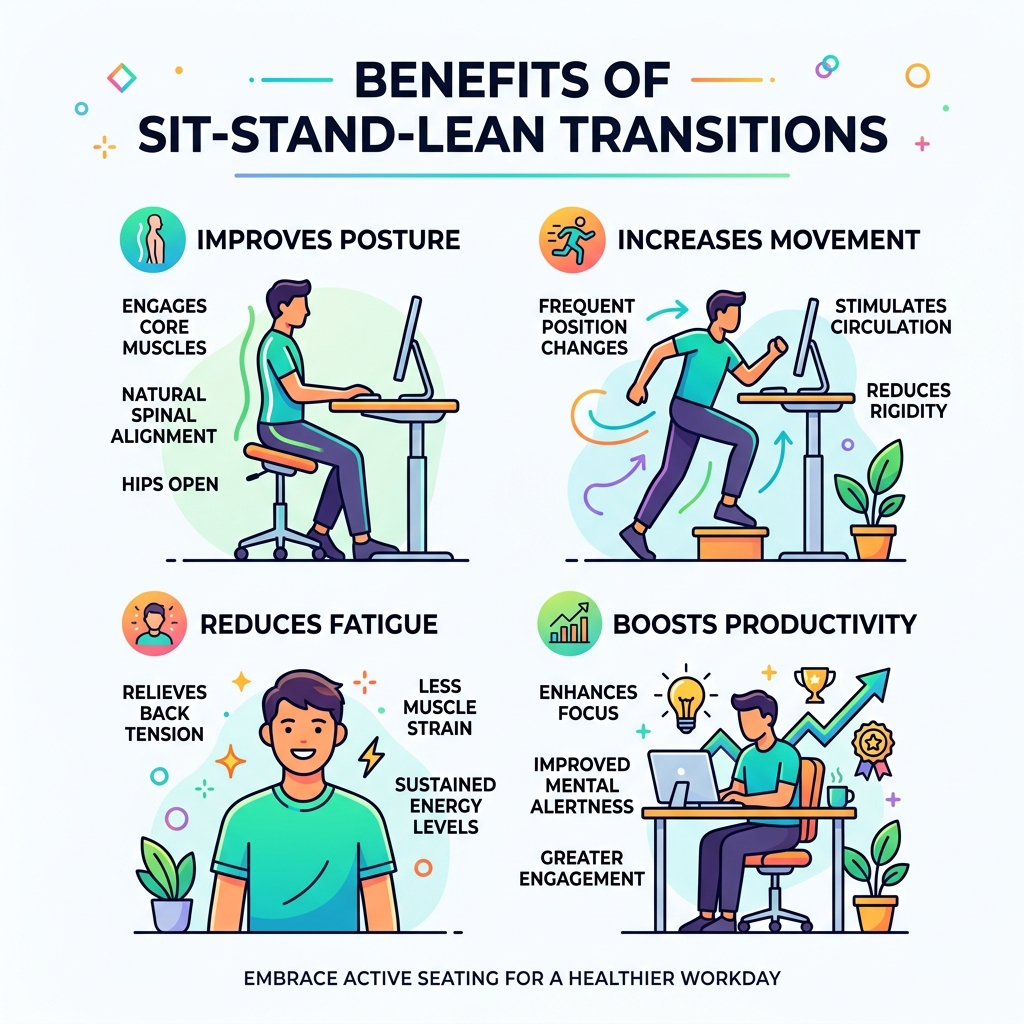
Ergonomic desk stools work differently. Instead of locking you into one rigid position, they put you in a “perching” posture — hips open, core gently engaged, spine naturally upright. The result is more movement, less strain, and a lot more energy by the end of the day.
The best part? There are options for every budget, body type, and workspace — from sub-$200 active stools to premium, sustainably made designs built to last a lifetime.
Key Differences Between Ergonomic Stools and Traditional Office Chairs

When we think of office seating, the image that usually pops up is a large, padded chair with a high back and armrests. While traditional task chairs provide total support, they often encourage “passive sitting,” where your muscles completely relax, leading to slouching and spinal compression. Ergonomic desk stools, on the other hand, are designed for “active sitting.”
The primary difference lies in the pelvic tilt. Traditional chairs often keep the hips at a 90-degree angle, which can flatten the natural curve of the lower back. Stools—specifically saddle stools—lower the thighs and open the hips to a wider angle (roughly 120 to 135 degrees). This creates a healthy pelvic tilt that stacks the vertebrae correctly.
Key technical differences include:
- Lumbar Support vs. Core Engagement: While chairs like the Aeron Stool offer advanced PostureFit SL back support, many stools are backless to force your core muscles to stabilize your trunk.
- Movement: Stools offer 360-degree movement and “wobble” bases that activate leg and back muscles. The Mirra 2 Stool features a loop spine for torsional flex, allowing you to reach and stretch laterally without the chair resisting you.
- Height Range: Stools generally feature a much higher pneumatic lift, making them ideal for standing desks or drafting tables.
- Non-Toxic Materials: We prioritize non-toxic ergonomic desk stools because they lack the heavy glues and foams that off-gas harmful chemicals, focusing instead on breathable mesh and sustainable polymers.
Health and Productivity Benefits of Active Seating
Investing in a high-quality stool isn’t just about furniture; it’s an investment in your metabolic health. According to Scientific research on Keegan’s posture studies, sitting in a saddle-like position promotes a “lordotic curve” (the natural S-curve of the spine), which reduces the pressure points that lead to chronic pain.
In fact, a staggering 95% of owners of high-end ergonomic stations report significant pain reduction. This isn’t magic—it’s biomechanics. By opening the hip angle, you decompress the spine and allow for better blood circulation to the lower extremities.
The benefits of using ergonomic desk stools include:
- Spinal Decompression: Perching reduces the intradiscal pressure in your lumbar region compared to traditional sitting.
- Alertness and Focus: Active sitting requires micro-movements. These movements keep your heart rate slightly elevated and your blood flowing, which prevents the “brain fog” associated with sedentary work.
- Muscle Activation: Even while “sitting,” your core, hip flexors, and calves are subtly engaged, burning more calories and maintaining muscle tone.
- Pressure Relief: The Aeron Stool uses 8Z Pellicle suspension to distribute weight evenly, eliminating the “pins and needles” feeling in your legs.
For those focused on long-term wellness, choosing the best eco-friendly desk chairs for posture ensures your workspace supports both your spine and the planet.
Exploring the Primary Types of Ergonomic Desk Stools
Not all stools are created equal. Depending on your workflow, you might prefer a stool that moves with you or one that provides a stable, “zero-gravity” feel.
| Stool Type | Best For | Key Feature |
|---|---|---|
| Saddle Stool | Long-term posture correction | Triangular seat for S-curve alignment |
| Wobble/Active Stool | Fidgeters & short tasks | Convex base for 360-degree tilt |
| Mesh Stool | Hot offices & full support | Breathable suspension (e.g., Aeron) |
| Perching Stool | Sit-stand desk users | High-reach pneumatic lift |
The Saddle and Pony Stools
The Saddle Stool and its smaller sibling, the Pony Stool, are the gold standard for hip health. They eliminate the “slump” by forcing the pelvis into a forward tilt. If you are looking for non-toxic ergonomic office chairs, these are often “Red List Free,” meaning they contain no harmful chemicals.
The Auto-Adjusters
If you hate fiddling with knobs, the Cosm Low Back Stool is a marvel of engineering. It uses an “Auto-Harmonic Tilt” mechanism that senses your weight and adjusts the tension automatically. Similarly, the Breck Stool features a weight-activated mechanism and a GeoStretch back that conforms to your movements.
Active Sitting Stools
The Autonomous ErgoStool is designed to keep you moving. Its weighted base allows you to lean and rock, which is perfect for staying engaged during long conference calls.
Sustainability and Environmental Factors in Workspace Design
We believe that a healthy workspace shouldn’t come at the cost of a healthy planet. Modern ergonomic desk stools are leading the way in “Planet Positive” manufacturing.
For example, the Humanscale Pony Saddle is carbon-positive. Each chair actually removes 4.4 lbs of CO2 from the atmosphere, saves 7 gallons of water, and offsets 9 kWh of energy. This is a massive shift from traditional manufacturing.
When shopping for your next stool, look for these certifications:
- BIFMA Level 3: The highest standard for furniture sustainability.
- GREENGUARD Gold: Ensures the product has low chemical emissions, protecting your indoor air quality.
- Indoor Advantage Gold: A strict certification for volatile organic compounds (VOCs).
The Aeron Stool is up to 91% recyclable and incorporates ocean-bound plastic in its frame. If you’re on a budget, you can even find affordable recycled wood office chairs that blend natural aesthetics with ergonomic principles.
How to Properly Use Your Stool for Optimal Comfort
Buying the stool is only half the battle; using it correctly is where the real benefits happen.
- The 90-Degree Rule is Dead: When perching on ergonomic desk stools, your hips should be higher than your knees. Aim for an angle of about 120 to 135 degrees. This “open hip” posture reduces the strain on your psoas muscles and lower back.
- The 30-Minute Interval: Even the best stool shouldn’t be used for 8 hours straight. We recommend changing your position every 30 minutes. Switch from standing to perching, or from perching to sitting in a traditional chair.
- Footrest Alignment: Most stools, like the Breck Stool, come with a built-in foot ring. Use this to keep your feet supported when you aren’t “perching” with your feet on the floor.
- Core Stabilization: Don’t lean all your weight into the stool. Think of it as a “kickstand” for your body. Your core should be doing about 10-20% of the work to keep you upright.
- Shoulder Relaxation: Ensure your desk is at a height where your elbows are at a 90-degree angle and your shoulders are relaxed. If you have to “shrug” to reach your keyboard, your stool is too low (or your desk is too high).
Frequently Asked Questions about ergonomic desk stools
How often should I switch positions when using ergonomic desk stools?
We recommend the “30-minute rule.” Your body isn’t designed to be static. Every half hour, you should shift from a perch to a stand, or take a quick walk. This prevents “posture fatigue” and keeps your circulation boosted. Stools are specifically designed to make these transitions easier than heavy, clunky office chairs.
Can a saddle-style ergonomic desk stool reduce chronic lower back pain?
Yes. By encouraging a lordotic curve (the natural S-curve), saddle stools take the pressure off the intervertebral discs. Many users report a 95% reduction in pain because the saddle design prevents the pelvis from tucking under—a common cause of lower back strain in traditional chairs. By opening the hip flexors, you also reduce the “pull” on your lower back muscles.
Conclusion
At FinanceInvestX, we see your workspace as an extension of your health and efficiency. Choosing the right ergonomic desk stools is more than just a furniture purchase; it’s a strategic investment in your long-term productivity and physical well-being. By opting for non-toxic materials, active sitting designs, and sustainable manufacturing, you are creating an environment where you can truly thrive.
Whether you choose the high-tech Aeron Stool or the minimalist Saddle Stool, the goal remains the same: move more, sit better, and feel healthier.