Sitting Is Hurting You – Here Are the Best Posture Support Stools for 2026
The best posture support stool can make a real difference if you spend hours at a desk and deal with back pain, fatigue, or stiffness by the end of the day.
Quick answer – here are the top picks for 2026:
| Stool | Best For | Price Range |
|---|---|---|
| Varier Move | Active sitting and movement | ~$579 |
| LeanRite Elite | Standing desk users | ~$629 |
| LIFEFORM Ergonomic Saddle | Professional saddle support | ~$595 |
| Herman Miller Cosm Stool | Minimalist, zero-adjustment | ~$1,380 |
| Autonomous ErgoStool | Budget-friendly option | ~$149 |
| Postura Foundation | Clinical pelvic and lumbar support | ~$99.99 |
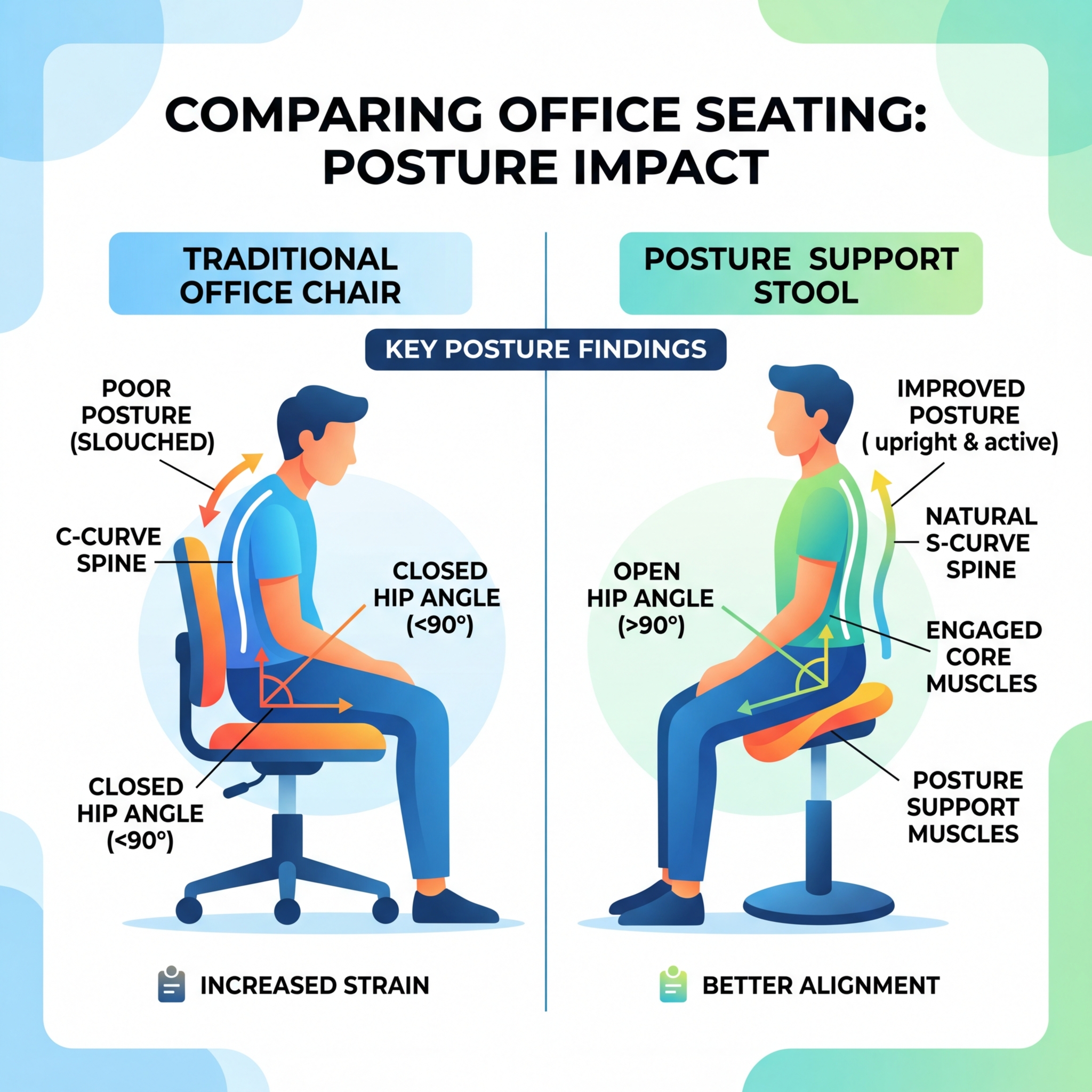
Most people don’t realize that how you sit matters just as much as how long you sit. Traditional office chairs let you slouch into a “C-curve” spine position, which compresses your discs and strains your lower back over time.
Posture support stools work differently. They encourage an open hip angle, engage your core, and keep your spine in its natural “S-curve” – even during long work sessions.
Poor posture from prolonged sitting is linked to back pain, reduced circulation, and fatigue. The good news? Switching to an ergonomic stool is one of the simplest changes you can make to your workspace.
This guide breaks down six strong options available right now, what to look for, and how to choose the right one for your body and work setup.
Why Your Workspace Needs the Best Posture Support Stool
We’ve all been there: it’s 3:00 PM, and your lower back feels like it’s been through a wrestling match. At FinanceInvestX, we believe that your workspace should be an investment in your long-term health, not a source of chronic pain. Traditional chairs often act as a “crutch” for our muscles, allowing them to switch off and sag.
A best posture support stool serves as a tool for active sitting. Unlike traditional chairs, these stools promote a “perching” posture. Research on perching postures suggests that forward-angled seating can improve lower back comfort by helping maintain the spine’s natural curvature.
Here is why we think you should consider the switch:
- Core Engagement: Because many of these stools lack a backrest, your core muscles have to do more of the work. This can help strengthen your “internal corset” over time.
- Open Hip Angle: Traditional chairs keep your hips at about a 90-degree angle, which can shorten hip flexors and contribute to sciatica and lower back pain. Stools typically open this angle to 120 degrees or more, reducing disc compression.
- Improved Circulation: By encouraging micro-movements, these stools keep your blood flowing. Better circulation means more oxygen to the brain, which can support focus and productivity.
- Spine Alignment: The goal is the “S-curve.” When we slouch, our spine turns into a “C,” putting more pressure on the intervertebral discs. A good stool helps you maintain that healthy “S” shape more naturally.
For those concerned about the materials in their office, we always recommend looking into non-toxic-ergonomic-desk-stools/ to ensure your air quality is as healthy as your posture.
Key Features to Look For in Ergonomic Stools
Not all stools are created equal. When we hunt for the best posture support stool, we look for specific engineering features that separate a simple stool from a true ergonomic tool.
1. Seat Shape (Saddle vs. Flat)
Saddle stools mimic the shape of an equestrian saddle. This design can help reduce pressure on the sit bones and keep the pelvis in a more neutral position.
2. Motion Mechanisms
Active sitting is the name of the game. Look for 3D motion: vertical, side-to-side, and 360-degree tilt. Dynamic movement can stimulate your discs and encourage your back and core muscles to stay engaged while you work.
3. Height Adjustability
If you use a standing desk, your stool needs a wide height range. Some ergonomic stools offer substantial adjustment, allowing you to transition from a lower sit to a higher perch with ease.
4. Stability and Base
A weighted or convex base is vital. You want a stool that moves with you but won’t tip over. Some wobble stools have a self-righting feature, while leaning perches use a heavy, flat base for maximum stability during support.
Posture Stool Comparison Table
| Feature | Saddle Stool | Wobble Stool | Leaning Perch |
|---|---|---|---|
| Primary Goal | Pelvic Alignment | Core Engagement | Standing Support |
| Movement | Minimal to Moderate | High (360 degrees) | Low to Moderate |
| Best For | Medical, dental, and office use | Collaborative spaces | Standing desks |
| Comfort Duration | High (with acclimation) | Moderate (1-3 hours) | Moderate (perching) |
When choosing, we also suggest checking best-eco-friendly-desk-chairs-for-posture/ to find options that use sustainable materials and high-density foam that won’t flatten over time.
Top 6 Best Posture Support Stool Picks for 2026

Selecting the right stool can feel overwhelming, so we’ve narrowed it down to six standout options based on build quality, warranty, and real-world usability.
Best Posture Support Stool for Active Sitting: Varier Move
The Varier Move has been a staple in the ergonomic world for decades, and for good reason. Its iconic convex wooden base allows for a wide range of motion.
- The Movement: It encourages 360-degree movement, which means your core stays engaged in subtle, almost invisible exercise.
- Design: It’s compact, making it a favorite for home offices.
- Pros: High-quality craftsmanship; encourages constant movement; great for standing desks.
- Cons: The triangular seat can take some time for your sit bones to get used to.
- Learn more: Varier Move – Best Ergonomic Office Stools For Active Sitting
Best Posture Support Stool for Standing Desks: LeanRite Elite
If you’ve invested in a standing desk but find yourself getting tired after an hour, the LeanRite Elite is a strong option.
- Sit-Stand-Lean: This isn’t just a stool; it’s a perching tool. It supports three distinct positions: sitting, leaning, and standing support.
- Clinical Backing: It was developed with input from orthopedic and physical therapy professionals to support better posture and back comfort.
- Stability: It features a patented stability system and an integrated anti-fatigue mat.
- Pros: Stable design; versatile sit-stand-lean functionality; tall height range.
- Cons: Higher price point; larger footprint than other stools.
Best Professional Saddle Stool: LIFEFORM Ergonomic Saddle
For those who want a premium saddle design, the LIFEFORM Ergonomic Saddle Stool is a standout.
- Pressure Reduction: It uses high-density foam that conforms to your body’s curves, reducing pressure on soft tissue and sit bones.
- Adjustability: It features tilt-lock and tilt-tension adjustment, allowing you to fine-tune pelvic angle.
- Industry Use: This style is popular with dental professionals and office workers who need to shift positions frequently.
- Pros: Excellent for spine alignment; high-quality upholstery; durable casters.
- Cons: 4-6 week shipping time; premium pricing (~$595).
Best Minimalist Design: Herman Miller Cosm Stool
If you hate fiddling with levers and knobs, the Cosm Low Back Stool is a polished, minimalist option.
- Auto-Harmonic Tilt: The stool automatically adjusts its tension based on your weight and posture.
- Intercept Suspension: The breathable mesh helps eliminate pressure points and keeps you cool.
- Warranty: It comes with a 12-year warranty covering major components.
- Pros: Zero-adjustment design; high-end aesthetic; strong durability.
- Cons: Very expensive (~$1,380); lacks the active wobble of some other stools.
Best Budget-Friendly Option: Autonomous ErgoStool
You don’t have to spend a fortune to improve your posture. The Autonomous ErgoStool is an accessible entry point.
- Dynamic Rocking: The weighted base allows you to tilt up to 30 degrees, encouraging movement while you work.
- Height Range: It offers a generous 10-inch height adjustment, making it suitable for both standard and standing desks.
- Pros: Affordable (~$149); easy to assemble; stable weighted base.
- Cons: The seat padding is firmer than premium models; shorter 2-year warranty.
Best for Clinical Support: The Postura Foundation
Sometimes you don’t need a whole new chair, but a structural intervention. The Postura Foundation is a clinical-style corrective support that can be placed on many firm seating surfaces.
- Active Leverage: Unlike memory foam that collapses, the Postura uses a rigid frame to provide active leverage, guiding your spine into an S-curve.
- Retraining Muscle Memory: It’s designed to help retrain your body to sit upright more naturally.
- Pros: Portable; rigid structure won’t flatten; 30-day money-back guarantee.
- Cons: Can be uncomfortable initially as your body adjusts to the alignment.
How to Transition to a Posture Support Stool Effectively
We’ll be honest with you: the first day you use the best posture support stool, you might hate it. That’s because your body has likely spent years relying on a chair back to hold you up. When you take that away, your core and back muscles have to wake up.
The Adjustment Period
Most users report an initial transition period of about two weeks. During this time, you might feel some muscle soreness in your shins, feet, or lower back. This is normal. It’s similar to returning to the gym after time away.
The 2-Hour Rule
Many people find that even comfortable posture stools work best as complementary seating. A practical sweet spot is often up to 2 hours at a time before switching back to a standard chair or a full standing position.
Tips for Success:
- Use a Footrest: A footrest can help distribute your weight more evenly to your heels, which takes pressure off your sit bones.
- Alternate Positions: Don’t sit on the stool for 8 hours straight. Alternate between sitting, perching, and standing.
- Acclimate Gradually: Start with 20-30 minute sessions and gradually increase the duration as your core strength improves.
- Check Your Desk Height: Ensure your desk is high enough to accommodate the perch height. If your desk is too low, you’ll end up slouching even on a stool.
For more tips on setting up a healthy workspace, check out our guide on non-toxic-ergonomic-office-chairs/.
Frequently Asked Questions about Posture Stools
Can a posture support stool help with sciatica and hip pain?
Yes. Sciatica discomfort is often aggravated by compressed discs and tight hip flexors caused by prolonged 90-degree sitting. By opening the hip angle to 120 degrees or more, the best posture support stool can reduce load on the lumbar spine and allow the hip flexors to lengthen, which may provide relief.
How long should I use an active sitting stool each day?
We recommend using it in intervals. Start with 20 minutes every hour. As your core gets stronger, you can move up to 1-2 hours at a time. Many users find these work best as a secondary chair to break up long periods of static sitting.
Are posture stools suitable for tall or heavy users?
Many models are designed with a wide range of users in mind. Always check the weight capacity and cylinder height before purchasing to make sure the stool fits your body size and desk setup.
Conclusion
At FinanceInvestX, we view ergonomic furniture not as an expense, but as a strategic investment in your productivity and long-term health. Choosing the best posture support stool for your needs — whether it’s the motion-rich Varier Move or the clinically-focused LeanRite Elite — can be the catalyst for a pain-free workday.
By encouraging active sitting, core engagement, and the natural S-curve of the spine, these stools do more than just provide a place to sit; they help you build a stronger, more resilient body.
Ready to upgrade your entire office setup? Explore more ergonomic solutions at FinanceInvestX and take the first step toward a healthier, more efficient workspace today.