Your Back Hurts. An Anti Fatigue Desk Stool Might Be the Fix.
The best anti fatigue desk stools available right now:
| Stool | Best For | Height Range | Weight Capacity |
|---|---|---|---|
| LeanRite Elite | Sit-stand-lean, back pain relief | 22.5″ – 46.2″ | 270 lbs |
| VIVO Posture Chair | Standing desk users, budget pick | 24″ – 46.3″ | 275 lbs |
| Uncaged Ergonomics Wobble Stool | Active sitting, small spaces | 23″ – 33″ | 250 lbs |
| Vari Balance Stool | Perching and movement | Pneumatic adjust | 275 lbs |
| Safco Focal Locus Stool | Tall users, premium setups | 4’11” – 6’8″ users | 300 lbs |
| Porvata Ergonomic Rocker | Sit-to-stand transitions | 19.5″ – 27.5″ | 250 lbs |
| Leitz Ergo Active Stool | Compact home offices | 22.4″ – 32.3″ | 242 lbs |
If you spend most of your workday sitting, you already know the feeling. Tight lower back. Heavy legs. That mid-afternoon energy crash that makes it hard to focus.
The problem isn’t just that you’re sitting too much. It’s that you’re sitting without moving. Static postures — even “correct” ones — put constant pressure on your spine and cut off circulation to your legs.
An anti fatigue desk stool is designed to break that cycle. Unlike a traditional office chair, it encourages small, constant movements — rocking, tilting, perching — that keep your muscles engaged and your blood flowing throughout the day.
These aren’t just trendy office accessories. Several models carry serious safety certifications like BIFMA compliance and UL certification. The LeanRite Elite, for example, holds a U.S. patent and has been endorsed by orthopedic surgeons and physical therapists.
The right stool won’t just make sitting more comfortable — it can change how your whole body feels by the end of the workday.
Below, we compare the top options so you can find the best fit for your body, your desk, and your budget.
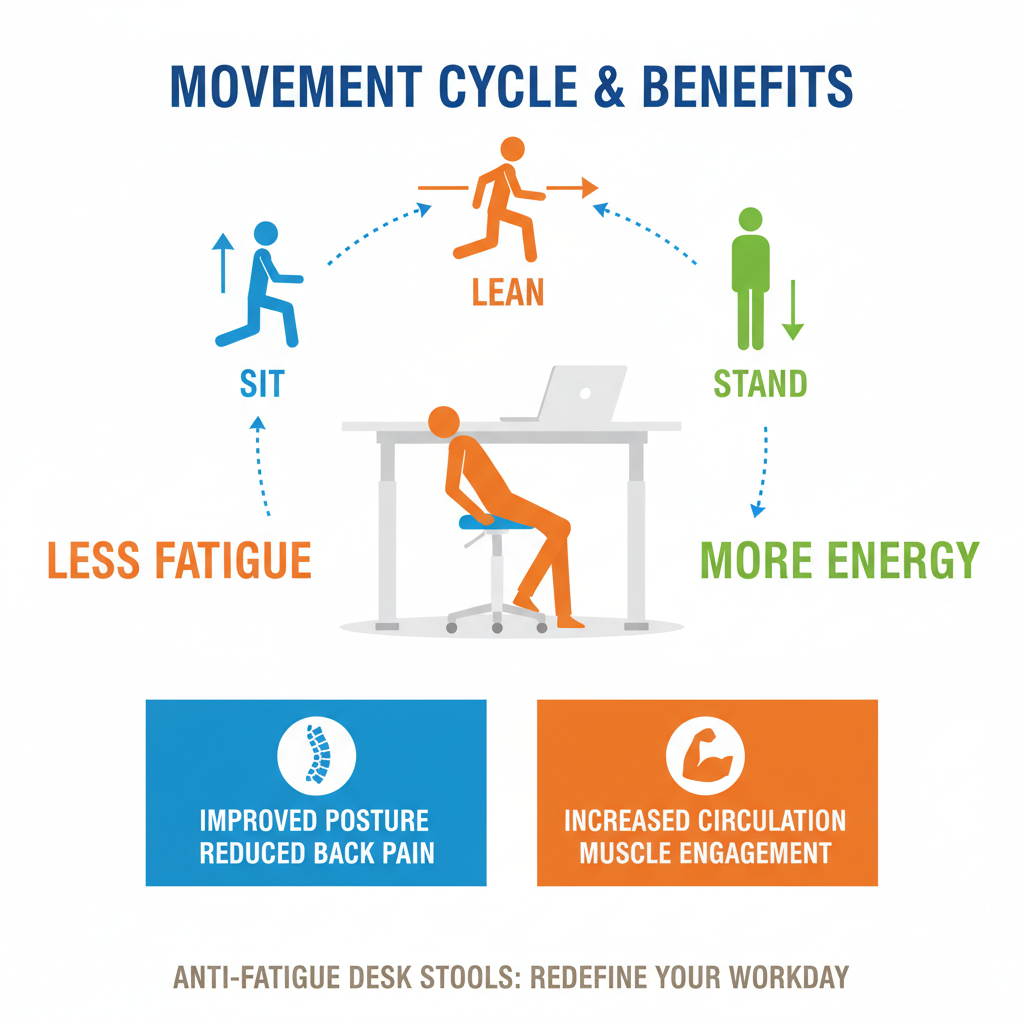
Understanding the Anti Fatigue Desk Stool
When we talk about an anti fatigue desk stool, we aren’t just talking about a tall chair. These are specialized ergonomic tools designed to bridge the gap between sitting and standing. Unlike traditional office chairs that encourage a 90-degree “static” sit, or standard wobble stools that might lack a stable base, an anti-fatigue stool focuses on support during “perching” or “leaning.”
A perching posture is a hybrid position where you are neither fully sitting nor fully standing. Your hips are open, your spine maintains its natural S-curve, and a significant portion of your weight is supported by the stool, while your feet remain firmly on the ground (often on a cushioned mat). This position is proven to reduce spinal load and pressure on the lower back compared to traditional sitting.
For those interested in the materials used in these products, we often look for non-toxic ergonomic desk stools that use high-quality, safe components. Many premium models, like the LeanRite Elite, utilize aircraft-grade aluminum and high-density polyurethane to ensure durability without off-gassing harmful chemicals.
How do anti fatigue desk stools promote active sitting?
The magic of these stools lies in their ability to facilitate “micro-movements.” Active sitting means your body is never truly still. Whether it’s the 360-degree swivel of the Vari Balance Stool or the rocking motion of a weighted base, these stools require your core muscles to engage constantly to maintain balance.
This core engagement isn’t a workout—you won’t break a sweat—but it is enough to keep your stabilizer muscles awake. By allowing for tilting, rocking, and twisting, these stools:
- Prevent the “slumping” habit common in traditional chairs.
- Encourage frequent posture changes.
- Keep the pelvis tilted forward, which naturally aligns the spine.
- Improve blood flow to the lower extremities.

Health Benefits of Active Perching
We’ve all heard that “standing is the new smoking,” but standing still for eight hours is just as hard on the body as sitting still. The real health “win” comes from movement. Using an anti fatigue desk stool provides several clinical-level benefits:
- Back Pain Prevention: By supporting a neutral spine and an open hip angle, these stools take the “crushing” pressure off your lumbar discs.
- Improved Circulation: Static sitting can lead to blood pooling in the legs. The micro-movements encouraged by active stools keep the “calf pump” working, which aids venous return.
- Core Engagement: You’re essentially performing a very low-intensity core stability exercise all day. This strengthens the muscles that support your spine.
- Metabolic Health: Small movements burn more calories than static sitting and help keep your metabolism from “shutting down” during long work sessions.
- Reduced Pressure Points: Traditional seats can cut off circulation at the back of the thighs. Many anti-fatigue stools feature “waterfall” edges or triangular saddle shapes (like the Leitz Ergo) to eliminate this pressure.
For those looking for more traditional seating that still prioritizes health, you might consider non-toxic ergonomic office chairs, but for the ultimate in dynamic movement, the perching stool is hard to beat. Research from organizations like the IGR Institute for Health and Ergonomics suggests that these dynamic postures are key to long-term wellness in the modern office.
Key Features to Look for in an anti fatigue desk stool
Choosing the right anti fatigue desk stool requires looking past the aesthetics. You need to ensure the mechanics match your body type and work habits.
| Feature | Why It Matters | What to Look For |
|---|---|---|
| Height Range | Determines if you can sit, lean, or perch. | Look for a wide range (e.g., 22″ to 46″). |
| Base Stability | Prevents tipping during leaning. | Weighted bases or wide, non-slip rubber grips. |
| Anti-Fatigue Mat | Reduces foot and leg strain. | Integrated mats or thick, removable foam pads. |
| Safety Specs | Ensures the product won’t fail under load. | BIFMA X5.1 compliance and UL certification. |
| Seat Material | Affects long-term comfort and health. | High-density foam; OEKO-TEX certified fabrics. |
The VIVO Posture Chair is a great example of a feature-rich option, offering an integrated anti-fatigue mat and a pneumatic lift for smooth height transitions. When evaluating these features, we also recommend checking out best eco-friendly desk chairs for posture to see how sustainability intersects with ergonomics.
Premium models often feature aircraft-grade aluminum for the frame and high-density polyurethane for the seat. These materials are chosen not just for strength, but because they maintain their shape over years of daily use. Look for “Dual Density Foam” (DDF), which provides a firm core for support and a softer outer layer for immediate comfort.
Choosing the Right Stool for Your Workspace
Not every anti fatigue desk stool fits every desk. Before you hit “buy,” consider these workspace factors:
- User Height and Weight: Most stools support up to 250–270 lbs, but some premium models like the Safco Focal Locus can handle up to 300 lbs and accommodate users up to 6’8″.
- Floor Surface: If you have hardwood floors, ensure the base has a non-skid rubber coating to prevent scratches and sliding. If you’re on carpet, a weighted “wobble” base often works best.
- Assembly and Maintenance: Most stools, like the Uncaged Ergonomics Wobble Stool, assemble in minutes without tools. For long-term care, look for seats with removable or easy-to-clean covers.
- Sustainability: If you are building an eco-conscious office, you might look into affordable recycled wood office chairs or stools like the Leitz Ergo, which features a seat cover made from 100% post-consumer recycled material.
Conclusion
At FinanceInvestX, we believe that your office furniture is an investment in your most valuable asset: your health. Choosing an anti fatigue desk stool is a proactive step toward a more productive, pain-free workday. The ROI of ergonomics isn’t just measured in comfort; it’s seen in higher energy levels, better focus, and reduced long-term healthcare costs associated with sedentary lifestyles.
When making your final selection, prioritize these criteria:
- Range of Motion: Does it allow you to lean, sit, and stand?
- Safety Certifications: Is it BIFMA or UL certified?
- Material Quality: Does it use non-toxic, durable components?
- Warranty: Does the manufacturer stand behind the product (e.g., 5-year or lifetime warranties)?
What is the weight capacity of a typical anti fatigue desk stool?
Most standard ergonomic stools have a weight capacity between 250 lbs and 275 lbs. However, heavy-duty models like the Safco Focal Locus are rated for up to 300 lbs. Always check the manufacturer’s safety margin to ensure the pneumatic lift will function smoothly at your body weight.
Are these stools suitable for all-day sitting?
While you can use them all day, the best practice is to follow a sit-to-stand ratio. Experts often recommend a 1:3 ratio—sitting or perching for 15 minutes out of every hour spent standing. The goal of an anti fatigue desk stool is to facilitate posture variation, not to replace one static position with another.
How do I maintain the seat and base?
Maintenance is generally simple. For fabric seats, particularly those using recycled materials, a damp cloth with mild soap is usually sufficient. For the base, check the stability bolts every few months to ensure they haven’t loosened from the rocking motion. If your pneumatic lift becomes “sticky,” a small amount of silicone lubricant can help. For more tips on keeping your workspace in top shape, check out more info about ergonomic furniture.